The wildebeest never stop moving. Around 1.5 million of them, with several hundred thousand zebra and gazelle, follow the rains in a loose clockwise loop through the Serengeti ecosystem and into Kenya's Masai Mara. Where they are in any given week depends on where it last rained, so what follows is a pattern, not a promise — but it is a reliable one.
December to March — the southern plains
The herds gather on the short-grass plains of the southern Serengeti and the Ndutu area of the Ngorongoro Conservation Area. Around 100,000 calves are born in a six-week window, generally between late January and mid-March, and predators follow. This is the easiest time to see the migration: the herds are concentrated, the plains are open, and the lodges around Ndutu put you in the middle of it.
April to May — heading north-west
As the plains dry, columns begin moving towards the central Serengeti and the western corridor. The long rains make some tracks heavy going, but the landscape is green, the light is soft and the parks are as quiet as they get. Good value, if you don't mind an afternoon shower.
June to July — the western corridor and the Grumeti
The herds reach the Grumeti River, where crocodiles wait at the crossings. Less dramatic than the Mara River later in the year, but far fewer vehicles — and from late June the northern Serengeti starts to fill.
Between November and mid-August the herds are on the Serengeti side of the ecosystem, before moving towards Kenya's Masai Mara in mid-August and September.
July to October — the Mara River
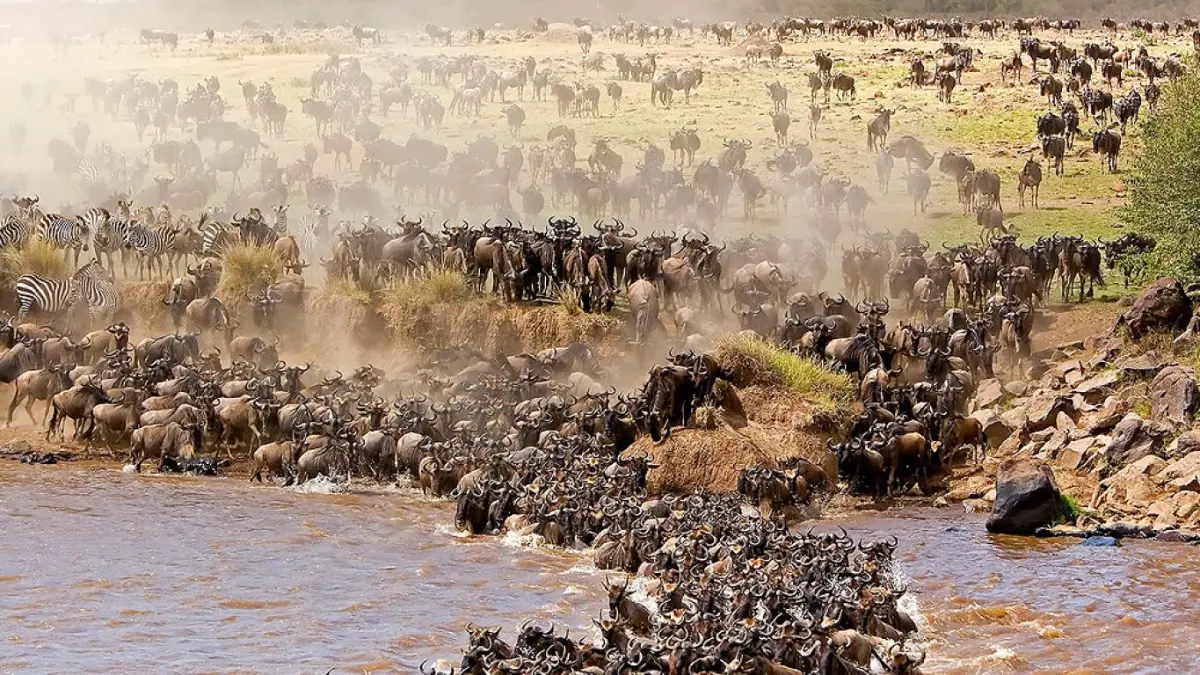
The famous crossings. Herds bunch up on the banks of the Mara River in the northern Serengeti (Kogatende, Lamai) and cross in nervous, chaotic waves — sometimes several times a day, sometimes not for days. Patience and a guide who reads the herds are everything. Part of the population crosses into the Masai Mara; a large part stays on the Tanzanian side all season.
November — the return south
With the short rains, the herds turn south again through the eastern and central Serengeti towards the plains where the loop began. A transitional month with unpredictable herd positions but excellent resident wildlife.
So when should you go?
- Calving and predators: late January to mid-March.
- River crossings: July to October, with August and September the peak.
- Fewest vehicles: April, May and November.
- General wildlife, regardless of the herds: any month — resident game does not migrate.
Tell us your dates and we will tell you honestly where the herds should be, and which camps put you closest. Our 8-day Great Migration Safari is re-routed every season for exactly this reason.